What follows are excerpts from the lab report
Introduction
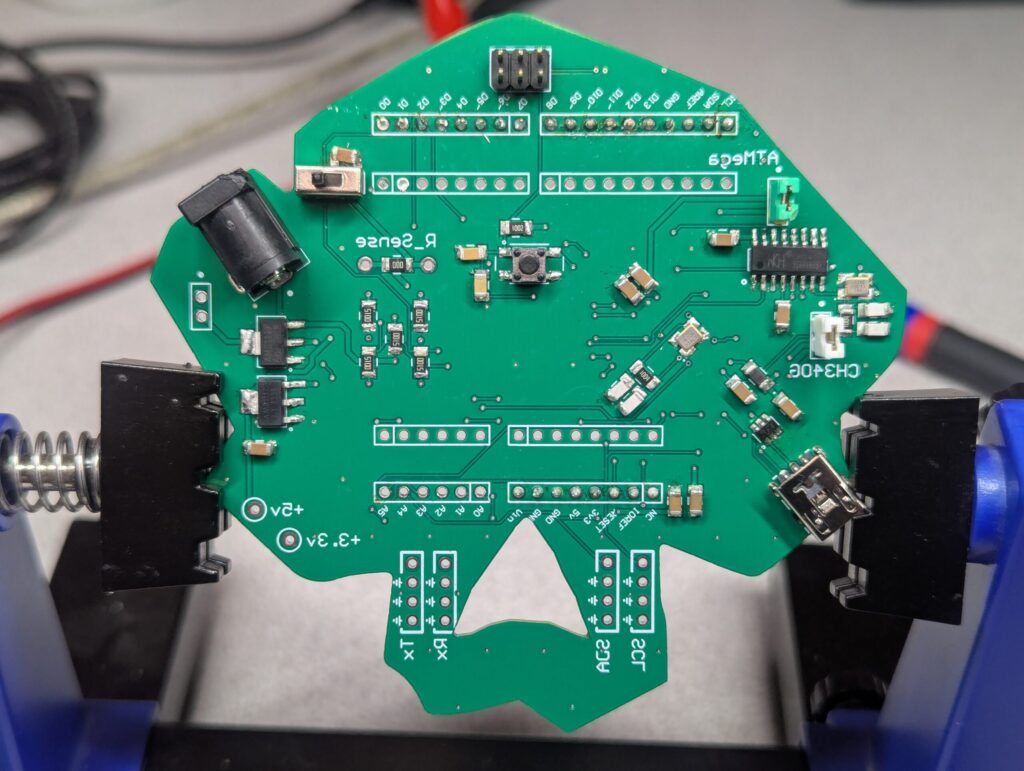
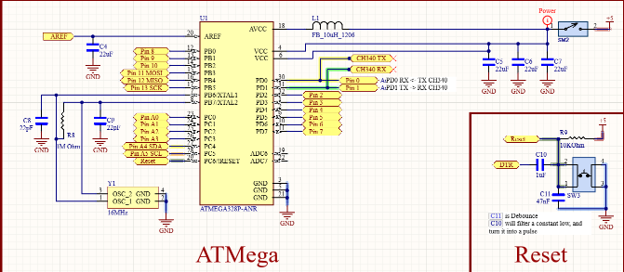
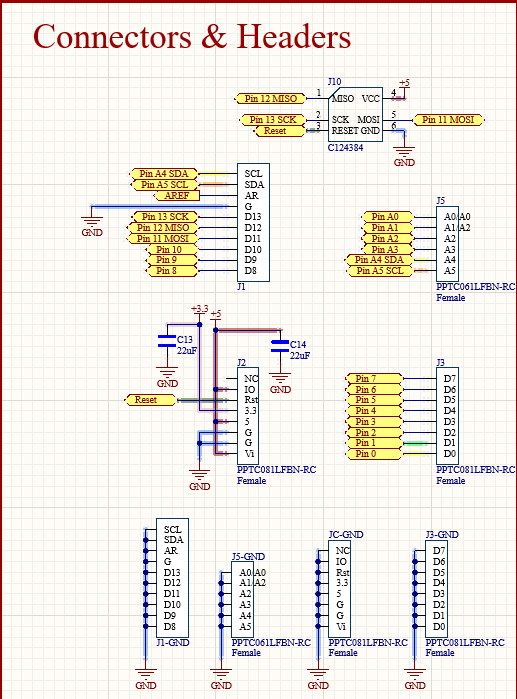
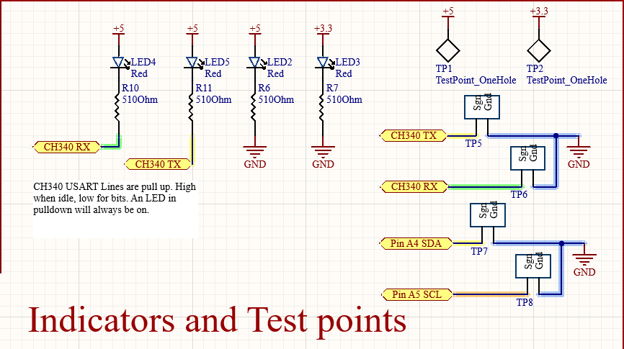
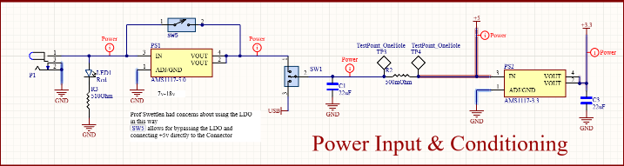
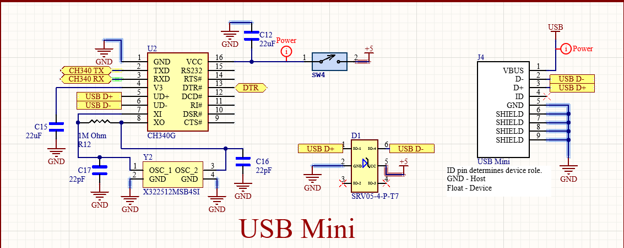
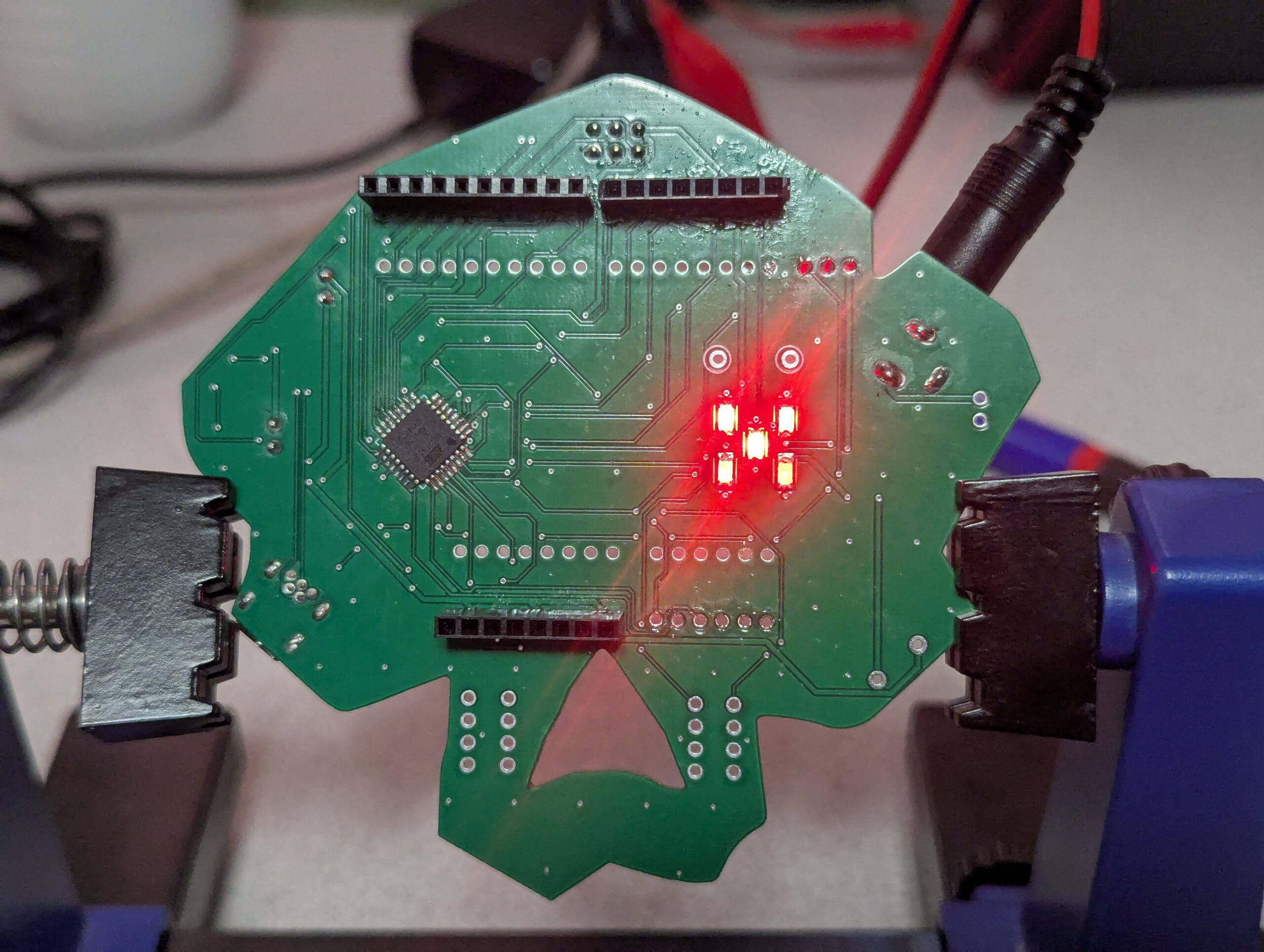
For this project, we designed our own Arduino board. Using lessons learned in this class, it is
hoped that we can make a better Arduino than the ones commercially available.
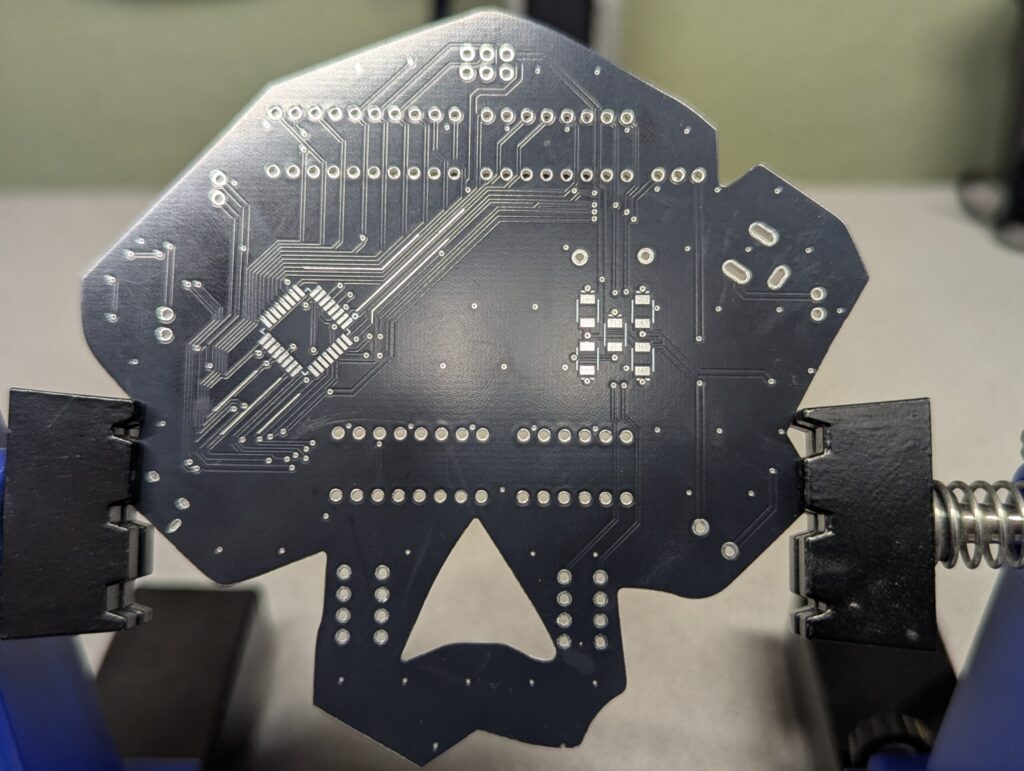
One thing of note: due to time constraints, I used Altium’s Auto Route tool. While I am not happy
with the results, it did produce a viable layout. After the Gerber files were submitted, I continued to
develop the layout. Once the v1 boards came in, I ordered a 2nd version with improved layout and some
minor corrections.
This report is for v1 of the board.
Testing
Testing was completed to compare my Arduino with a commercial one. I tested and compared the following items
- Switching Noise
a. Quite High
b. Quite Low - Power Rail Noise
- Near Field Emission Noise
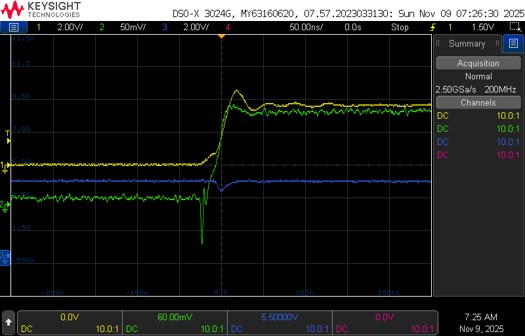
Switching Noise
Yellow, Ch1 – TP4, voltage to LED2, used for trigger
Green, Ch2 – Quite Low
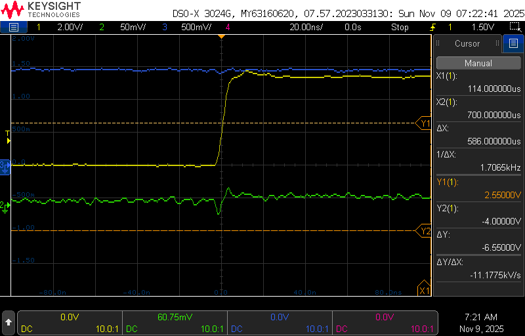
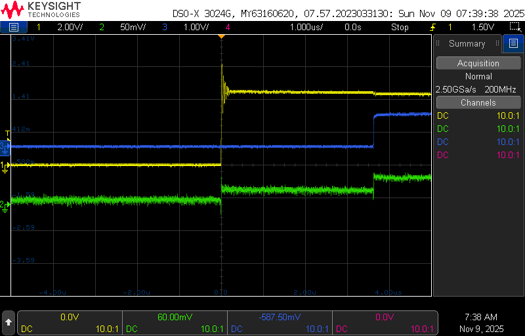
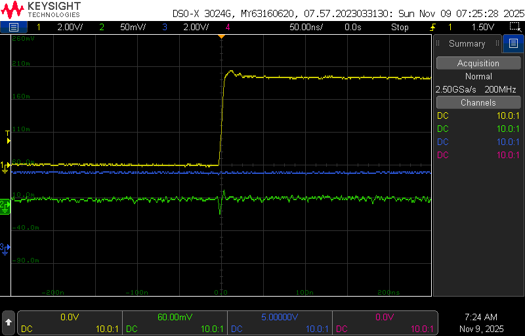
The most obvious difference between the Custom Arduino and the commercial Arduino is that in order to see the noise of the Custom Arduino, we needed to set the scope to 50 ns/div in order to see the noise, while the Commercial Arduino noise is spread out over several microseconds. Additionally, the noise peaks were much larger.
Power Rail Noise
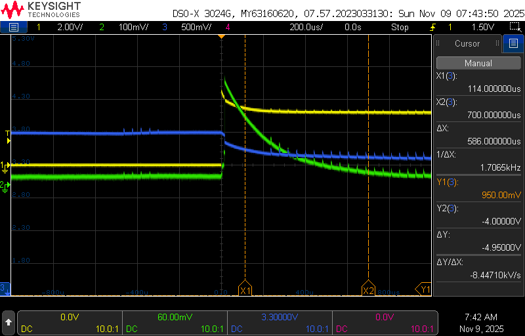
Yellow – Ch1, TP2 Slammer Current
Green – Ch2,
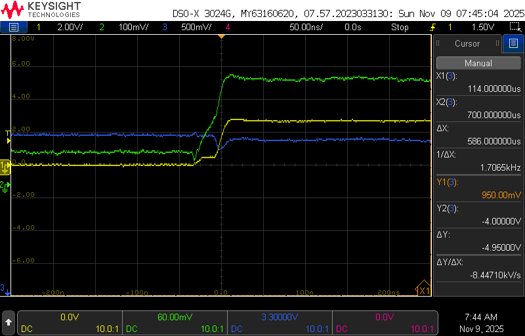
Here we can see that the noise on the power line is greater on the Custom Arduino, but more interestingly, the Custom Arduino is capable of providing the full 5 volts during the slam, while the Commercial Arduino is caping at roughly 3 volts.
Near Field Emission Noise
In this category, the Commercial Arduino out performed the custom Arduino. The noise from the custom Arduino was much greater.

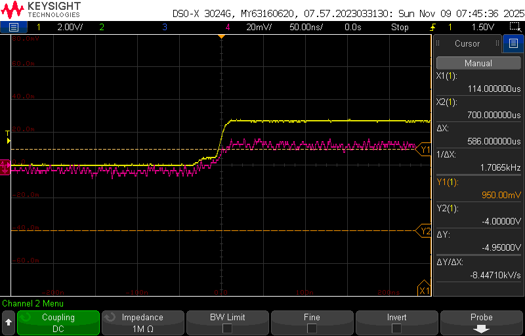
In this category, the Commercial Arduino out performed the custom Arduino. The noise from the custom Arduino was much greater.
Conclusions
In general, the custom Arduino performed better, with reduced switching noise and better voltage handing on the slammer circuit. However, it was noisier on the near field emissions. The reduced switching noise was likely due to having ground plains on both sides of the PCB, while the better handling of the switching circuit can be attributed to more capacitors on the power line and a higher quality LDO.
The noisier near field emissions could be an artifact of the testing but was likely caused by poor trace routing due to using Altium’s Auto Route tool.
Analysis of the Project
I was happy with the result. The v2 boards have been ordered to address the few minor concerns I had. A clean and well annotated schematic layout was important to producing a working project, as was have multiple people check out my schematic. While I despised the initial results of the auto route tool, it did produce a working layout, and created a baseline that was very easy to refine.